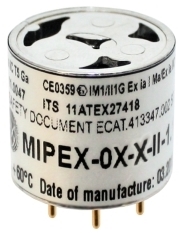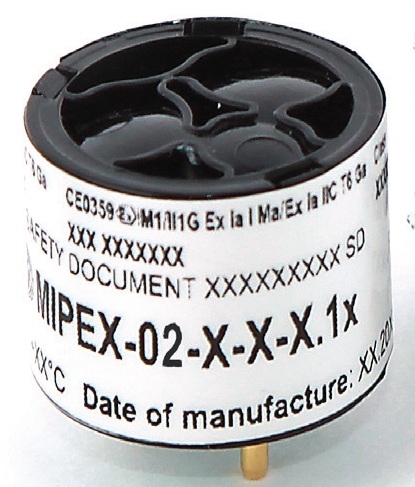

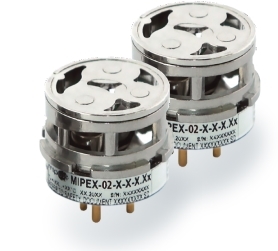
- Detected gas Gases that can be detected by the sensor
- CH4
- Measurement technology The physical or technical principle used by the measurement function. Use the generic principle from the documentation, not a brand or marketing name. It helps assess operating characteristics where the principle varies; it need not repeat a principle fixed by the category.
- IR absorption
- Product series The manufacturer's series designation for related product models. Record the exact manufacturer name for the series. It helps locate related models and documentation; it is not a brand, model number or Actualog category.
- 02
- Product family The manufacturer's named product family or commercial line. Preserve the name used in the manufacturer's catalogue. It helps recognise related products; it is not the Actualog category and need not identify an individual model.
- 1-II-1.1
Electrical characteristics
- Operating supply voltage range The lowest and highest supply voltages within which the device is specified to operate normally. Use the manufacturer's supply-input range, including polarity and AC or DC conditions. It determines compatibility with a power supply; it is not an output range or a survival limit.
- 3 – 5 V
- Current consumption The average electrical current drawn by the product in the stated operating mode and at the stated supply voltage. Use the manufacturer's average-current specification and retain relevant duty and timing conditions. It helps estimate supply loading and battery demand; startup and maximum currents are separate specifications.
- 1 mA
- Power consumption The electrical power drawn by the product in the operating mode stated in its specification. Use the manufacturer's value with its supply, load and typical-or-maximum basis. It helps assess energy demand and supply capacity; it is not useful output power or energy accumulated over time.
- 4 W
- Digital output The digital output interfaces provided for transmitting data or signals. Use the manufacturer's output specification, retaining direction, electrical levels and protocol restrictions. They help match a receiving device; a bidirectional interface does not establish every possible output mode.
- UART
Measurement
- Detected gas Gases that can be detected by the sensor
- CH4
- Measurement technology The physical or technical principle used by the measurement function. Use the generic principle from the documentation, not a brand or marketing name. It helps assess operating characteristics where the principle varies; it need not repeat a principle fixed by the category.
- IR absorption
- Measurement range The lowest and highest values of a quantity that the instrument can measure within its stated performance specification. Use the manufacturer's rated range with the quantity and unit identified. It shows whether expected measurements fit the usable span; alarm thresholds and detection limits are not automatically measurement-range endpoints.
- 0 – 100 % vol.
- Response time The time after a specified change in the measured quantity until the output reaches the manufacturer's stated response criterion. Record the time with its criterion, such as t90, and its typical-or-maximum basis. It indicates suitability for changing processes; different response criteria do not produce directly comparable values.
- 30 s
- Accuracy The maximum stated measurement error expressed as a percentage of the reading under specified conditions. Record the positive percentage and its reference conditions. It describes reading-dependent error, not full-scale error, absolute error, uncertainty or accuracy class.
- 5
Model and lifecycle
- Product series The manufacturer's series designation for related product models. Record the exact manufacturer name for the series. It helps locate related models and documentation; it is not a brand, model number or Actualog category.
- 02
- Product family The manufacturer's named product family or commercial line. Preserve the name used in the manufacturer's catalogue. It helps recognise related products; it is not the Actualog category and need not identify an individual model.
- 1-II-1.1
Operating conditions
- Operating temperature range The lowest and highest temperatures at which the product can operate within its stated limits. Use the manufacturer's operating specification and retain the temperature location, load and exposure conditions. The range helps assess application suitability; storage temperature and the temperature being measured are different specifications.
- -40 – 60 °C
General
- Warm up time
- 40
Installation and maintenance
- MTBF The stated mean operating time between failures of a repairable product under defined conditions. Retain whether it is predicted or observed, with method and environment. It helps assess reliability assumptions; it is not guaranteed lifetime, maintenance interval or warranty.
- 10 h
Physical characteristics
- Weight The mass of the product in its stated configuration, without transport packaging. Use the manufacturer's net mass and retain which accessories or working fluids are included. This helps plan handling, supports and installation; it is not shipping weight.
- 0.02 g