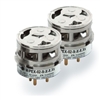
No product description has been added yet.
Lifecycle stage
Batch production
Communities



Facets
Product gallery
1 product images
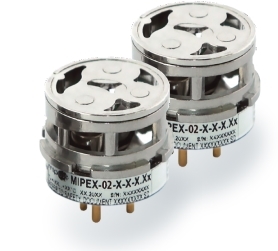
Attributes
General
Communication interfaces
Communication interface
The interfaces through which the device exchanges data with other equipment, including wired and wireless interfaces. Select those supported by the specified model and retain version or accessory requirements. They determine connection compatibility; connector details and communication protocols may require separate specifications.
Communication protocol
The protocols supported for exchanging data or commands with other systems. Select the protocols documented for the model and retain required versions or profiles. Matching protocols helps interoperability but does not guarantee a matching physical interface or application data model.
Analog output
The documented electrical outputs used to represent measurements without a full data-exchange protocol. Preserve the exact signal designation and range. They help match a receiving input; voltage, current, resistance and pulse-based outputs must remain distinguishable.
Wireless interface
The wireless interfaces documented for the device configuration. Retain versions and operating restrictions. They help assess connectivity; a radio interface alone does not guarantee a compatible application protocol or a particular range.
Device interface and maintenance
Display available
Whether the product includes a built-in display. Record Yes or No only when its presence or absence is established. It helps distinguish local-readout products; Yes does not identify display technology, and an optional external display is not integrated.
Firmware upgrade supported
Whether the product supports updating its embedded firmware through a manufacturer-supported procedure. Use Yes only when an update method is documented; leave an unknown capability empty. This helps assess maintainability, but it does not promise future releases or a particular support period.
Display and output
Display type
The technology used by the product's built-in display or readout, such as an analog scale, LCD or OLED. Select all technologies provided and use None only when the absence of a built-in display is confirmed. It helps assess readability; touch operation and an external display are separate characteristics.
Electrical characteristics
Operating supply voltage range
The lowest and highest supply voltages within which the device is specified to operate normally. Use the manufacturer's supply-input range, including polarity and AC or DC conditions. It determines compatibility with a power supply; it is not an output range or a survival limit.
3 - 5 V
Current consumption
The average electrical current drawn by the product in the stated operating mode and at the stated supply voltage. Use the manufacturer's average-current specification and retain relevant duty and timing conditions. It helps estimate supply loading and battery demand; startup and maximum currents are separate specifications.
1 mA
Power consumption
The electrical power drawn by the product in the operating mode stated in its specification. Use the manufacturer's value with its supply, load and typical-or-maximum basis. It helps assess energy demand and supply capacity; it is not useful output power or energy accumulated over time.
4 W
Digital output
The digital output interfaces provided for transmitting data or signals. Use the manufacturer's output specification, retaining direction, electrical levels and protocol restrictions. They help match a receiving device; a bidirectional interface does not establish every possible output mode.
UART
Installation and maintenance
MTBF
The stated mean operating time between failures of a repairable product under defined conditions. Retain whether it is predicted or observed, with method and environment. It helps assess reliability assumptions; it is not guaranteed lifetime, maintenance interval or warranty.
12 h
Installation type
The physical arrangement for which the equipment is designed, such as benchtop, floor-standing, portable or handheld use. Select the arrangements stated for the supplied model. This helps plan where and how the equipment will be used; fastening method and outdoor suitability are separate properties.
Mounting type
The method used to secure the product to a support, structure or mating component. Select the mounting methods supported by the manufacturer's installation information. It determines the supports and fittings required; orientation, interface dimensions and outdoor suitability are specified separately.
Power source
The source of power or actuation required by equipment in its normal configuration. Distinguish external supplies from stored energy using the manufacturer's documentation. It helps plan installation; it is not a set of output ratings for a power-source product.
Operating mode
Manual, semi-automatic, automatic, continuous, intermittent, or on-demand operation.
Maintenance interval
The time between scheduled maintenance operations under specified service conditions. Identify the operation and calendar-time or operating-time basis. It helps plan downtime; cycle-based intervals and the duration of maintenance are different properties.
Expected service life
The expected operating time until the product reaches the manufacturer's stated end-of-life criterion. Record the time with its duty, environment and failure or performance criterion. It helps plan replacement and costs; it is not warranty, shelf life or mean time between failures.
Measurement
Detected gas
*
Gases that can be detected by the sensor
CH4; C3H8
Measurement technology
The physical or technical principle used by the measurement function. Use the generic principle from the documentation, not a brand or marketing name. It helps assess operating characteristics where the principle varies; it need not repeat a principle fixed by the category.
IR absorption
Measurement range
The lowest and highest values of a quantity that the instrument can measure within its stated performance specification. Use the manufacturer's rated range with the quantity and unit identified. It shows whether expected measurements fit the usable span; alarm thresholds and detection limits are not automatically measurement-range endpoints.
Response time
The time after a specified change in the measured quantity until the output reaches the manufacturer's stated response criterion. Record the time with its criterion, such as t90, and its typical-or-maximum basis. It indicates suitability for changing processes; different response criteria do not produce directly comparable values.
30 s
Accuracy
The maximum stated measurement error expressed as a percentage of the reading under specified conditions. Record the positive percentage and its reference conditions. It describes reading-dependent error, not full-scale error, absolute error, uncertainty or accuracy class.
5
Measurement identity
Measured parameter
The quantities or properties that the instrument can measure. Use the manufacturer's supported-function list where those functions vary within a product class. It helps describe multifunction capability; measured substance, measurement principle, unit and range remain separate characteristics.
Output signal
The kinds of signal through which the product provides measurement results or measurement-related switching states to another device. Select the documented outputs for the supplied configuration. They help match a controller, recorder or alarm input; signal ranges, connectors and protocol versions are specified separately.
Measurement quality
Accuracy class
The accuracy class assigned to the instrument or a specified measurement function under an identified standard. Record the exact declared class label, including letters, such as 0.5 or 0.5S. It helps compare the applicable accuracy requirements, but it is not a measured error and classes from different standards are not automatically equivalent.
Resolution
The smallest change in a measured quantity the instrument can distinguish under specified conditions. Preserve the manufacturer's value and unit, distinguishing physical resolution, display increment and converter bit depth. It helps assess observable detail; finer resolution does not establish better accuracy.
Repeatability
The closeness of repeated measurements made under the same conditions. Preserve the complete specification, including units, statistical basis and test conditions. It helps assess consistency; consistent results are not necessarily close to the correct reference value.
Warm-up time
The time after power-up or activation before the instrument meets its stated measurement performance. Use the manufacturer's warm-up specification with its environmental conditions and typical-or-maximum basis. It indicates how soon reliable measurements are available; it is different from response time and the duration of a measurement.
Calibration interval
The specified time between scheduled calibrations of the instrument. Use the manufacturer's recommendation or the identified calibration programme and retain the applicable conditions. It helps plan service and downtime; it is not calibration duration and is not automatically the same as a required verification interval.
Model and lifecycle
Product series
*
The manufacturer's series designation for related product models. Record the exact manufacturer name for the series. It helps locate related models and documentation; it is not a brand, model number or Actualog category.
04
Product family
*
The manufacturer's named product family or commercial line. Preserve the name used in the manufacturer's catalogue. It helps recognise related products; it is not the Actualog category and need not identify an individual model.
II-3.1 B
Model first year
The year in which the manufacturer first released the product model. Use an authoritative release or catalogue record. It helps identify the model generation; it is not the manufacturing year of an individual item.
Model last year
The last year in which the manufacturer produced the model, when documented. Leave it empty when production continues or the end year is unknown. It helps interpret lifecycle information; it is not a promised support-end date.
Warranty
The manufacturer's warranty duration for the product and market. Retain the starting condition, scope and exclusions in the warranty terms. It helps compare support commitments; warranty differs from service life and is not an unconditional return or replacement right.
Operating conditions
Operating temperature range
The lowest and highest temperatures at which the product can operate within its stated limits. Use the manufacturer's operating specification and retain the temperature location, load and exposure conditions. The range helps assess application suitability; storage temperature and the temperature being measured are different specifications.
-40 - 60 °C
Permissible relative humidity
The range of ambient relative humidity in which the product can operate as specified. Use the manufacturer's percentage limits together with the temperature and condensation conditions. These limits help assess environmental suitability; a non-condensing rating does not permit condensation.
0 - 98 %RH
Storage temperature range
The lowest and highest temperatures allowed while the product is stored and not operating. Use the manufacturer's storage limits, retaining restrictions on duration, packaging or state of charge. The range helps prevent deterioration before use and does not give permission to operate at those temperatures.
-50 - 60 °C
Operating altitude above sea level
The altitude above sea level at which the product is specified to operate. Retain limits and derating requirements from its documentation. It helps assess installation suitability; it is not a vehicle's flight ceiling or a measured altitude.
Ingress protection rating
The declared IP code describing the protection provided by an enclosure against access to hazardous parts and the ingress of solid objects and water. Record the complete code and its applicable conditions from the product documentation. It helps assess environmental suitability; do not infer the code from appearance or use it as an impact rating.
Physical characteristics
Weight
The mass of the product in its stated configuration, without transport packaging. Use the manufacturer's net mass and retain which accessories or working fluids are included. This helps plan handling, supports and installation; it is not shipping weight.
10 g
Length
The overall length of the product along the direction shown in its drawing. Use the external dimension for the stated configuration, including projections when specified. It helps check fit and installation space; working stroke, reach and diameter are separate dimensions.
Width
The overall width of the product in the orientation shown in its drawing. Use the external dimension, not the width of a working area or processed strip. It helps check clearances, mounting space and fit with adjacent parts.
Height
The overall height of the product in its stated orientation and configuration. Use the manufacturer's drawing and include fixed projections when the dimension includes them. It determines the vertical installation space; operating clearance and lifting height are different characteristics.
Power input and consumption
Power supply type
Whether the device operates from mains power, a battery or both. Use the documented options for the supplied configuration. It helps assess deployment flexibility; it describes a consuming device, not the performance of a battery sold separately.
Minimum input voltage
The lowest input voltage at which stated operating performance is provided. Use the manufacturer's lower operating limit and conditions. It helps check supply compatibility; a startup threshold or survival limit may be different.
Maximum operating voltage
The highest voltage at which the product is specified to operate normally under stated conditions. Use the value for the relevant circuit and retain its DC, AC RMS or other stated basis. It helps check operating compatibility; breakdown, test and absolute-maximum voltages are different limits.